ETH Zurich builds lab-grown muscle robot that jumps a third of its body length
ETH Zurich researchers reported a 1.5 cm robot driven by lab-grown muscle that jumps about 5 mm and walks at 6.2 mm/s, designed first in simulation.
By Berkant A.Published
 Tech AI Latest
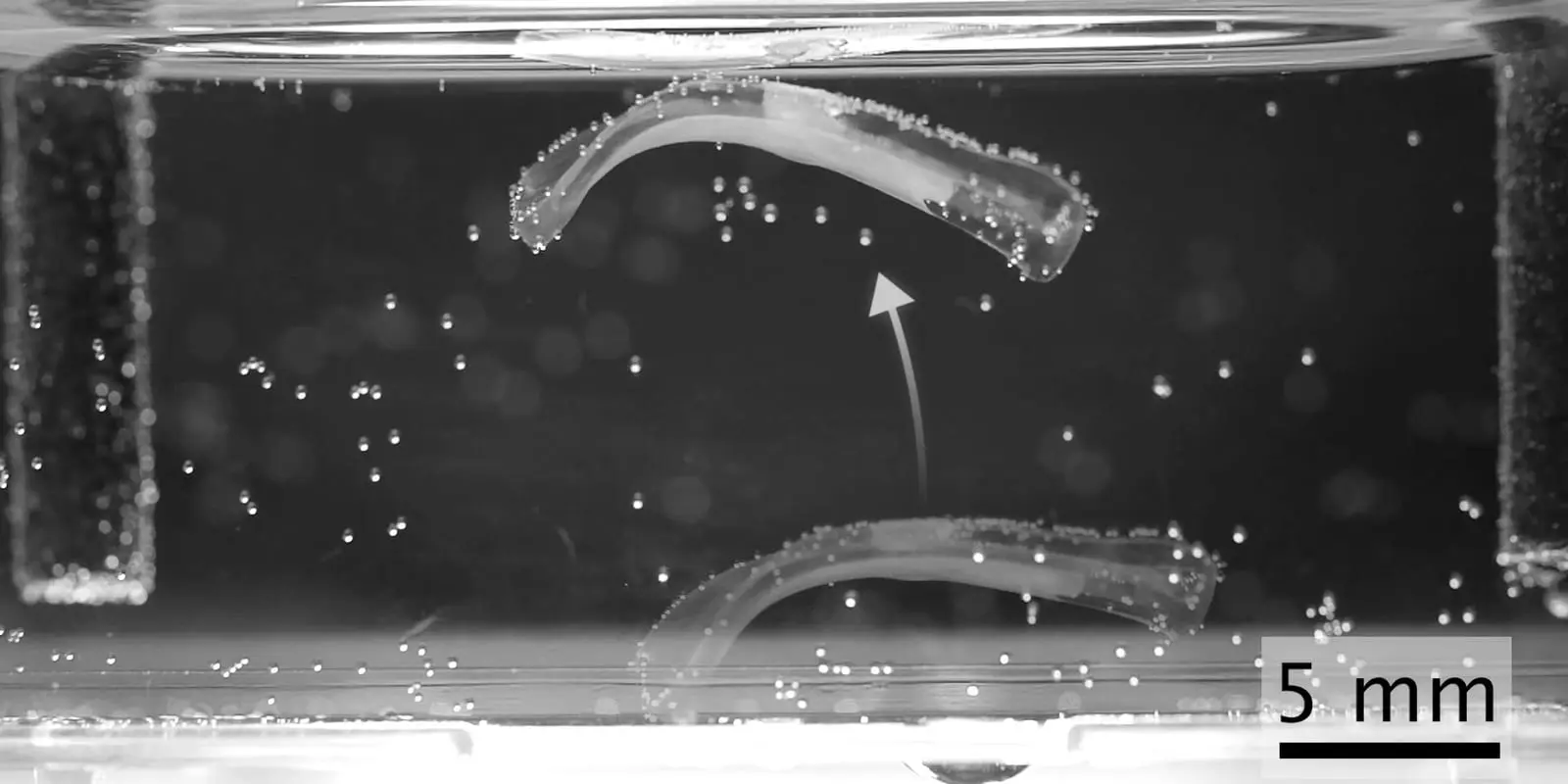
Researchers at ETH Zurich's Soft Robotics Lab reported in Nature Communications a biohybrid robot powered by lab-grown mouse muscle tissue on a 3D-printed hydrogel scaffold. The 1.5 cm actuator lifts about 5 mm off the dish in one contraction, about a third of its body length, and a walking version reaches 6.2 mm/s. The team designed muscle and scaffold together in simulation. ETH announced the work on 22 October 2026.
Key facts
- Announced: 22 October 2026 (ETH Zurich news); paper in Nature Communications
- Actuator: lab-grown skeletal muscle from mouse cells on a hydrogel scaffold, about 1.5 cm long
- Jump: about 5 mm in one contraction, roughly a third of body length
- Range of motion: up to 11x earlier systems with a similar amount of muscle tissue
- Walking version: 6.2 mm/s, which the authors say is the fastest relative to body length for a walking biohybrid robot
- Not stated: muscle force, efficiency, lifespan
What the ETH Zurich team reported
Researchers in the Soft Robotics Lab at ETH Zurich described a biohybrid robot driven by lab-grown muscle in a news release on 22 October 2026. The paper, "Co-optimized volumetric muscle design for large dynamic deformations in versatile biohybrid robots", appears in Nature Communications. Doctoral student Aiste Balciunaite and Mike Y. Michelis are co-lead authors, and Professor Robert Katzschmann is senior author. M. Filippi, P. Paniagua and O. Yasa are also listed as authors.
The actuator is skeletal muscle tissue grown from mouse muscle cells on a soft, water-rich hydrogel scaffold, about 1.5 cm long. Fine grooves in the scaffold anchor the tissue and line up the muscle fibres, which reduces force lost in transfer. The scaffolds are 3D-printed by xolography in about one minute each.
The results
In a single contraction the actuator lifts about 5 mm off the dish, around a third of its body length. The team reports a range of motion up to 11 times greater than earlier systems with a similar amount of muscle tissue. A walking version moves at 6.2 mm per second, which the researchers say is faster relative to body length than any walking biohybrid robot reported so far.
The design came from simulation. Muscle and scaffold were optimised together by an algorithm and then refined over repeated lab experiments. Balciunaite says that with earlier systems "you sometimes had to look under a microscope to see the flexing", and calls the design work "an iterative process". Katzschmann says: "We're just beginning to build robots in a more natural way."
Why it matters for robotics
Most robots run on electric motors. Biohybrid robots use living muscle instead, and this result shows it producing large, fast movements rather than flexing that is barely visible. Designing in simulation first also links the work to the wider robotics field, from NVIDIA's Isaac Lab to Boston Dynamics' GR3 hand. The limits are clear in the release: the robots need a nutrient solution to keep the tissue alive, cultured muscle varies from sample to sample, and larger systems would need an artificial vascular system, which the team calls one of the biggest challenges.
What to watch next
Muscle force, energy efficiency, sample counts and how long the tissue stays functional are not stated in the announcement. The paper itself should give more detail, including how the design carries over to robot shapes beyond the jumping and walking versions. ETH notes that use outside the lab is a long way off. More research-stage robotics is under Robotics & Physical AI.
What changed
| Before | Biohybrid muscle actuators produced small movements, in some cases visible only under a microscope |
|---|---|
| After | A co-optimised muscle and hydrogel design jumps about a third of its body length and walks at 6.2 mm/s |
| Who it affects | Soft robotics and biohybrid robotics researchers, and teams designing small-scale actuators |
Questions people ask
- How far can the ETH Zurich muscle robot jump?
- About 5 mm off the dish in a single contraction, roughly a third of its 1.5 cm body length, according to ETH Zurich.
- What powers the robot?
- Skeletal muscle tissue grown in the lab from mouse muscle cells, attached to a 3D-printed hydrogel scaffold.
- Can it work outside the lab?
- Not yet. The tissue needs a nutrient solution, and ETH says practical use outside the lab is a long way off.
Sources
- One small leap for a muscle, one giant step for robotics (ETH Zurich, 22 Oct 2026)
- Co-optimized volumetric muscle design for large dynamic deformations in versatile biohybrid robots (Nature Communications, 11 Sep 2026)
Reference pages
- ETH Zurich company
Spotted an error? See the corrections policy and tell the editor. Facts in this story come from the sources listed above; vendor claims are attributed.
Comments
Loading comments.