BMW Group passes one million driverless car movements inside its plants as Oxford joins
BMW Group said on 27 October 2026 that its in-plant automated driving system has moved one million new cars without drivers, with MINI Oxford the fourth site.
By Emre A.Published
 Tech AI Latest
BMW Group said on 27 October 2026 that its Automated Driving In-Plant system has moved one million new vehicles without a driver. MINI Plant Oxford is now the fourth site using it, after Dingolfing, Leipzig and Regensburg, and logged more than 53,000 movements in the past year. The network averages about 3,500 driverless moves a day. Spartanburg in the US is next. Cost and staffing effects are not stated.
Key facts
- Announced: 27 October 2026 (BMW Group press release)
- Milestone: one million vehicles moved without drivers since the 2022 Dingolfing pilot
- Sites: Dingolfing, Leipzig, Regensburg and MINI Plant Oxford; Spartanburg within the next year
- Volume: about 3,500 automated movements a day; more than 53,000 at Oxford in the past year
- Technology: LiDAR in the plant, cloud software and motion planning, built with Embotech
- Not stated: cost savings, staffing changes, investment per plant
What BMW Group announced
BMW Group said on 27 October 2026 that one million new vehicles have now been moved and guided through its plants by Automated Driving In-Plant, known internally as AFW. The system drives finished and partly finished cars without anyone inside, in defined production and logistics areas.
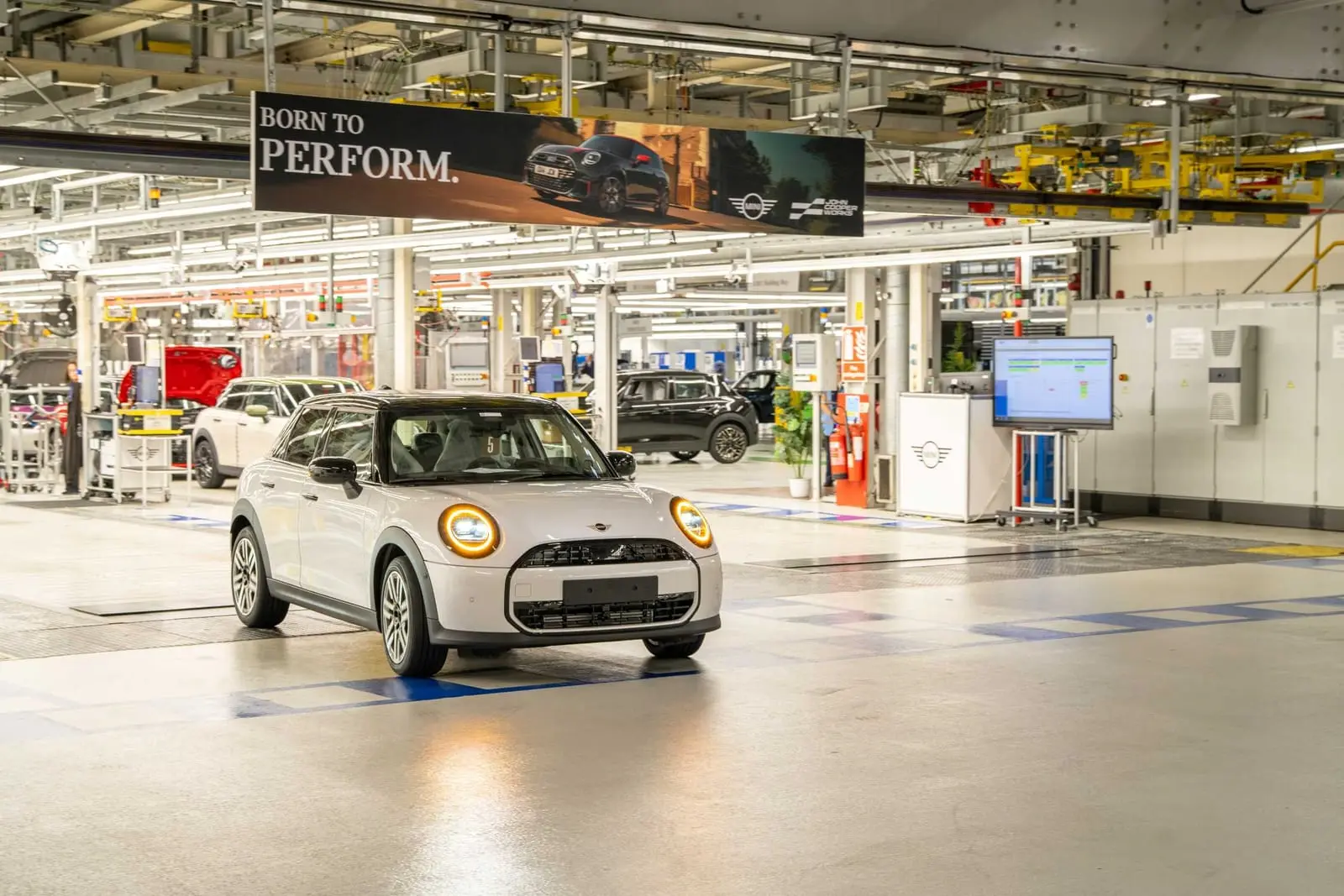
MINI Plant Oxford is the fourth site to use AFW, after Dingolfing, Leipzig and Regensburg in Germany. Oxford alone accounted for more than 53,000 automated vehicle movements in the past year. Across the network, BMW says about 3,500 driverless movements now take place every day. Plant Spartanburg in South Carolina is next, with the technology due there within the next year.
How the system works
AFW does not rely on sensors in the car. The LiDAR sensors sit in the plant infrastructure along the route and track the surroundings in real time, so any vehicle can be moved regardless of its equipment. Cloud software and motion planning do the rest. BMW says the cars react to people, other vehicles, driverless transport vehicles, logistics traffic and temporary obstacles. The company says artificial intelligence supports the development, simulation and operation of the system, and that AFW is CE-certified for use in production.
Oxford adds one new step. It is the first BMW site where automated vehicles connect directly with existing plant control systems: AFW parks a car precisely next to a lifting device, where a set operation is carried out. BMW says Dingolfing has the largest LiDAR infrastructure in Europe. The technology was developed with Swiss company Embotech, in which BMW i Ventures took a financial stake in December 2024.
Production board member Raymond Wittmann says BMW "recognised the potential of Automated Driving In-Plant early" and is "now rolling out this technology worldwide".
What changed and why it matters
Most robotics news is about humanoids that are still in pilots. This is the quieter kind of factory automation that already runs at volume. Moving a new car from the end of the line to a parking or loading area is a job usually done by a driver, one car at a time. By putting the sensors in the building rather than in each vehicle, BMW turns every car it builds into a vehicle that can drive itself inside the plant, without changing the product.
The release gives volumes but no economics. It does not say how many driver jobs the system replaces or reassigns, how much a LiDAR installation costs per plant, or how often vehicles stop for a person to intervene. Those are the numbers other carmakers would need before copying the approach. For humanoid work in logistics, compare the Agility and GXO deployment.
What to watch next
The next milestone is the Spartanburg rollout, the first AFW site outside Europe. Watch whether BMW extends the system from internal moves to new tasks, as it did with the lifting device in Oxford, and whether Embotech sells the same approach to other manufacturers. More factory and vehicle automation news is under Robotics & Physical AI.
What changed
| Before | AFW ran at Dingolfing, Leipzig and Regensburg, with no published total |
|---|---|
| After | Four plants including MINI Oxford, one million driverless movements and about 3,500 a day, with Spartanburg next |
| Who it affects | BMW plant logistics staff, production planners at other carmakers, and suppliers of factory LiDAR and motion planning software |
Questions people ask
- How many cars has BMW moved without drivers in its factories?
- One million, according to BMW Group's 27 October 2026 release, counted since the pilot started at Dingolfing in 2022.
- Which BMW plants use automated driving in production?
- Dingolfing, Leipzig, Regensburg and MINI Plant Oxford. BMW says Spartanburg in the US will follow within the next year.
- Do the cars need their own self-driving sensors?
- No. BMW says the LiDAR sensors are installed in the plant infrastructure, so vehicles can be moved regardless of their equipment.
Sources
Reference pages
- BMW Group company
Spotted an error? See the corrections policy and tell the editor. Facts in this story come from the sources listed above; vendor claims are attributed.
Comments
Loading comments.