MIT-led team doubles accuracy of two-to-six-week weather forecasts with machine learning
An MIT-led team reported in Nature that a machine learning correction doubled the accuracy of ECMWF forecasts two to six weeks ahead, beating long-term norms.
By Emre AlemdarPublished
 Tech AI Latest
Researchers from MIT, Harvard, the University of Toronto, ECMWF, Microsoft and others reported in Nature a machine learning method that corrects the errors of weather models two to six weeks ahead. Applied to the European Centre for Medium-Range Weather Forecasts' main model, it doubled forecast accuracy in that range and, for the first time, beat climatological averages, according to MIT. MIT News described the work on 14 October 2026. The method is open source.
Key facts
- Announced: 14 October 2026 (MIT News); paper in Nature
- Range: subseasonal forecasts, two to six weeks ahead
- Result: doubled the accuracy of ECMWF's model in that range and beat climatological averages, the team reports
- Also: statistically significant improvement for extreme weather; brought weaker models roughly level with ECMWF
- Method: a machine learning post-processing layer that learns from a model's errors; open source
- Authors include MIT's Judah Cohen and Microsoft's Lester Mackey; size of the extreme-weather gain not stated
What the researchers reported
A team led from MIT described in Nature a machine learning method that improves weather forecasts two to six weeks ahead, the so-called subseasonal range. MIT News reported the paper, "Advancing Subseasonal Forecasting with Machine Learning", on 14 October 2026. The method is a post-processing layer: it learns from a forecasting model's past errors and corrects its output.
Applied to the main model of the European Centre for Medium-Range Weather Forecasts (ECMWF), the correction doubled forecasting accuracy in the two-to-six-week range. The team says that for the first time, forecasts at that range beat climatological averages, the long-term norms that forecasters use as a baseline. It also reports a statistically significant improvement in predicting extreme weather, better land forecasts in most regions, and gains for other models, bringing weaker models roughly level with ECMWF.
Who did the work
MIT research scientist Judah Cohen led the work with lead authors Hannah Guan of Harvard College, Soukayna Mouatadid of the University of Toronto and Genevieve Flaspohler. Co-authors come from Brazil's National Institute for Pure and Applied Mathematics, DTN, ECMWF and Microsoft, including Lester Mackey. The team entered three models in an ECMWF forecasting competition last year; the winning entry combined ECMWF's model with another and then applied the correction.
Cohen is quoted saying that "extreme events might be the most impactful part of this for society" and that the method is "open source and low cost". The model was built on MIT's Engaging computing cluster but reportedly runs without a supercomputer. He also notes that when ECMWF built its own non-AI error correction, its model got worse at predicting extreme weather, which is why the gain on extremes stands out. The work was funded by the US National Science Foundation, Brazil's Carlos Chagas Filho Foundation and the European Union.
Why it matters
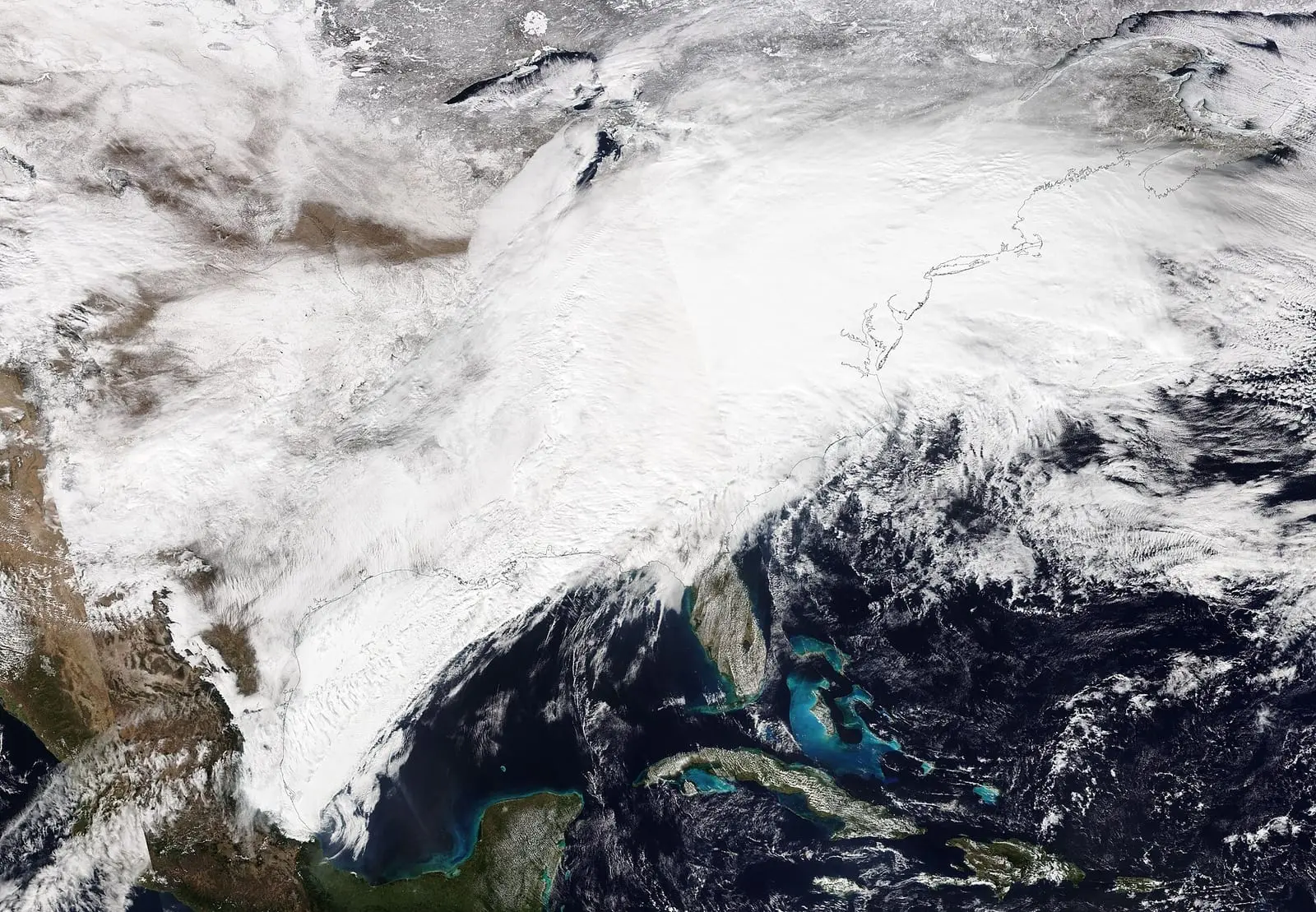
Forecasts beyond two weeks have long been seen as unreliable, a limit tied to chaos theory since the 1970s. Cohen cites an energy official who said two weeks' warning of an ice storm would be enough to prepare, and the article recalls the 2021 Texas winter storms, which killed at least 246 people. The study's claim to beat climatology at that range is the key result, though MIT does not give the size of the extreme-weather improvement. Other AI for Earth science this month includes Google DeepMind's ForTy forest map.
What to watch next
Kenya's meteorological office has contacted the team about using the model for its monsoon season, but no deployment is confirmed. Adoption by national weather services is the next test. More research is under AI Research.
What changed
| Before | Subseasonal forecasts two to six weeks ahead did not beat climatological averages |
|---|---|
| After | A machine learning correction doubles ECMWF accuracy in that range and beats climatology, according to the Nature paper |
| Who it affects | Weather services, energy grid operators, agriculture and emergency planners |
Questions people ask
- What did the MIT-led team improve?
- Weather forecasts two to six weeks ahead. Their machine learning correction doubled the accuracy of ECMWF's model in that range, according to MIT News.
- Is the forecasting method available to use?
- Judah Cohen describes it as open source and low cost, and MIT says the final model runs without a supercomputer.
- Where was the study published?
- In Nature, under the title "Advancing Subseasonal Forecasting with Machine Learning".
Sources
- Researchers improve weather forecasts looking two to six weeks out (MIT News, 14 Oct 2026)
- Advancing Subseasonal Forecasting with Machine Learning (Nature, 14 Oct 2026)
Reference pages
Spotted an error? See the corrections policy and tell the editor. Facts in this story come from the sources listed above; vendor claims are attributed.
Comments
Loading comments.